
Heads Up: How much?! 🍓
Can we hit them with the real price of inaction or indifference in our campaigns?

The Brief:
Biodiversity loss is a very real issue, but it can feel distant from most people’s everyday lives. People understand, for example, that bees are important, but the consequences of their decline feel pretty abstract.
French environmental charity Terre d’Abeilles wanted to change that by connecting the fate of pollinators to something everyone is directly impacted by.
The Campaign:
To mark World Bee Day, Terre d’Abeilles partnered with TBWA\Paris to transform an ordinary French market into a glimpse of the future.
For one day, fruit and vegetable prices dramatically increased. Tomatoes cost €180 per kilo. A single cucumber was €30. A punnet of strawberries cost €120.

Market-goers assumed the vendor had made a mistake. But the shocking prices were based on scientific modelling of what food could cost in a world without pollinators.
Rather than telling people that bees are disappearing, the campaign let them experience what that disappearance might actually mean. They turned an environmental issue into an economic one.
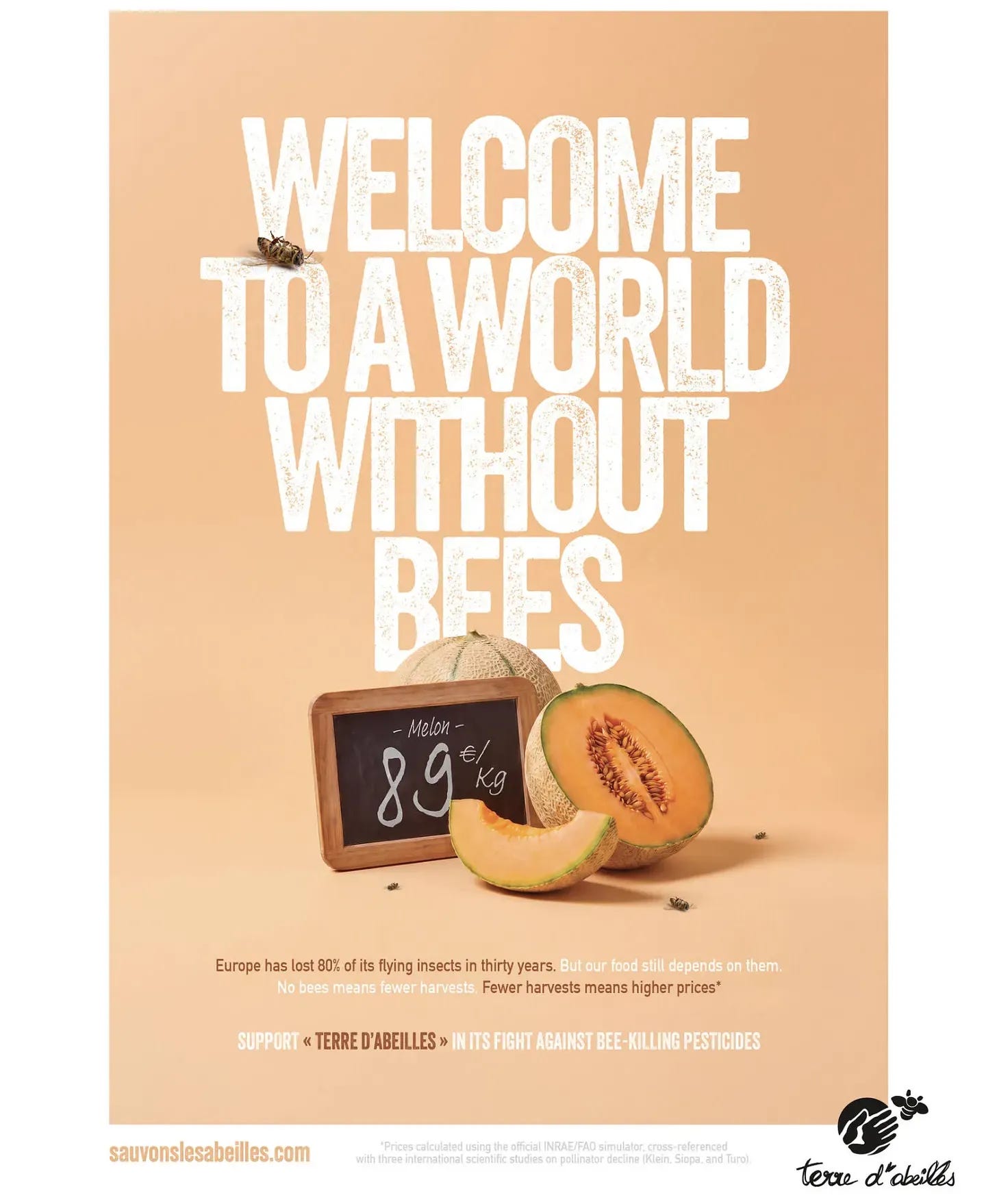
The campaign isn’t necessarily asking us to care about bees or biodiversity. It’s simply pointing out that ignoring the issue will have very real and direct effects on you, the viewer.
Maybe not today, but in a future that’s not so far off as you might think.
Why does it stand out:
✅ Makes the abstract tangible: It’s hard to picture ecosystem collapse, but it’s easy to picture being asked to pay €180 for tomatoes.
✅ Compounds the timeline: A world where this problem starts to create a notable impact might seem far away, but this brings it into our immediate frame of reference and highlights why action is needed now.
✅ Plays off an existing concern: Instead of competing with the cost-of-living crisis for attention, the campaign reframes it, showing that environmental decline and rising food prices aren’t separate conversations.
What can we learn from this:
We usually want to make people understand how bad the situation is for animals right now, that every moment of inaction means more suffering in the present.
But one of the biggest challenges in animal advocacy is that the consequences of action often feel more tangible than the consequences of inaction. Changing your diet, paying a little more, or giving up familiar habits can feel immediate. The benefits for animals, biodiversity or the climate often feel distant or invisible.
So how might your audience experience the consequences of not acting?
Like this campaign, we can certainly point to ecological impacts, but there are other avenues too. What does a future with fewer wild animals look like? How does intensive farming affect public health, antibiotic resistance or pandemic risk? What does environmental degradation mean for our food, our communities or our quality of life?
The goal isn’t to shift the focus away from animals. It’s to help people see that our futures are connected. When the cost of inaction becomes as vivid as the cost of changing our behaviour, the conversation shifts. Suddenly, doing nothing no longer feels like the easy option.
In short: When people can picture the impact on their own lives, understanding follows naturally.
Heads Up Challenge: What future consequence could inaction have for the audience of your campaign? If the cost of changing feels immediate, how could you make the cost of not changing feel just as real?
(Copy the below into a working document that you can use for the challenge each week)
Your Brief:
Idea 1:
Idea 2:
Idea 3:
Set aside a weekly 15 minute slot to complete these weekly creative tasks and why not schedule a call with others on your team to talk through your thoughts on this topic and share ideas for you to try out?
Thank you for reading, you’re awesome!
Know someone that might enjoy Heads Up? They can subscribe here.
Looking for someone to bounce an idea off or talk about how you can use a case study in your context? We offer free one-off ‘thought partnership’ calls where we can work together on your current challenges or queries. Reach out at hello@campaignslab.org